What is an Industrial Converter and How Does It Work?
An Industrial Converter plays a pivotal role in modern manufacturing processes. It transforms electrical energy from one form to another, ensuring optimal efficiency. This device is essential in various applications, including power regulation and signal processing. With the increasing demand for reliable energy solutions, understanding its functionality becomes crucial.
The operation of an Industrial Converter can seem complex. It typically includes components like transformers and rectifiers. These parts work together to modify voltage levels and current types. However, even an experienced technician may encounter challenges. Troubleshooting and maintenance require expertise and knowledge.
In today's world, where technology evolves rapidly, the reliability of these converters is paramount. Companies often depend on Industrial Converters for uninterrupted operations. Yet, even minor defects can disrupt productivity. Thus, ongoing education and awareness about its workings are essential for professionals in the field.
What is an Industrial Converter?
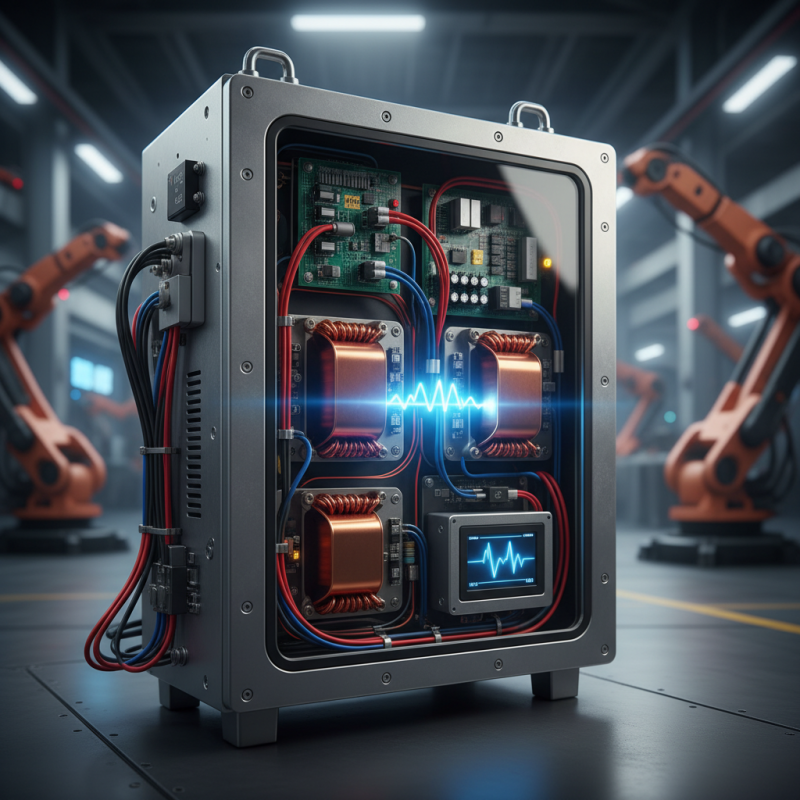
An industrial converter is a crucial device used in various manufacturing sectors. It changes electrical energy from one form to another, ensuring that machinery operates efficiently. The main types of converters include AC-DC converters, DC-AC converters, and DC-DC converters. Industrial converters play a significant role in processes such as power supply systems, motor control, and renewable energy integration.
According to a report by MarketsandMarkets, the industrial converter market is expected to grow significantly, reaching over $12 billion by 2025. This growth is driven by the increasing demand for energy-efficient solutions in factories. For instance, the integration of renewable energy sources like solar and wind into industrial systems relies heavily on converters. They enable smoother operation and adaptability to variable energy supply.
Despite their importance, many companies struggle with the selection and implementation of industrial converters. Misjudging power requirements or choosing inefficient converters can lead to energy losses. A recent survey revealed that nearly 30% of firms experienced downtime due to converter failures. This highlights the need for careful evaluation and expertise in the selection process. Proper training and knowledge-sharing can help mitigate these issues.
Types of Industrial Converters Used in Industry
Industrial converters play a pivotal role in various sectors. Their primary function is to transform electrical power for diverse industrial applications. Understanding the different types is essential for optimizing performance and efficiency.
One common type is the AC to DC converter. This device is widely used in manufacturing processes to provide stable direct current for equipment. Recent industry reports indicate that the global market for AC to DC converters is projected to grow at a CAGR of over 6% from 2023 to 2028. This growth reflects the increasing demand for renewable energy sources and efficient power management systems.
Another prevalent type is the DC to AC converter, often referred to as an inverter. These converters allow for the use of renewable energy by converting stored DC power into AC power. They are crucial in solar energy systems, among other applications. Interestingly, a survey found that nearly 70% of industrial energy users are exploring inverter-based solutions to enhance energy efficiency. These converters not only boost operational efficiency but also reduce carbon footprints.
What is an Industrial Converter and How Does It Work? - Types of Industrial Converters Used in Industry
| Type of Converter | Function | Components | Applications |
| AC-DC Converter | Converts alternating current (AC) into direct current (DC) | Transformers, Rectifiers, Filters | Power supply for electronic devices, battery charging |
| DC-AC Converter | Converts direct current (DC) to alternating current (AC) | Inverters, Filters, Control systems | Renewable energy systems, UPS systems |
| DC-DC Converter | Converts one level of DC voltage to another | Switching regulators, Charge pumps | Battery management systems, Electric vehicles |
| AC-AC Converter | Converts AC power from one frequency to another | Phase controllers, Solid-state relays | Speed control of AC motors, Voltage regulation |
Key Components of an Industrial Converter
Industrial converters are essential in converting electrical energy into usable forms for various applications. Understanding their key components is crucial for optimal performance and maintenance.
One vital component is the transformer. It adjusts voltage levels to match the requirements of connected equipment. Without a properly functioning transformer, equipment may receive insufficient or excessive voltage, leading to damage or inefficiency.
Rectifiers also play a significant role. They convert alternating current (AC) into direct current (DC). This conversion is vital for many industrial processes. If rectifiers fail, it can disrupt the entire operation. Additionally, inverters are essential for converting DC back to AC. Each of these components must work harmoniously.
Finally, filters are employed to smooth out electrical signals. They reduce noise and ensure the power supply remains stable. Neglecting maintenance of these filters can result in performance degradation. By focusing on the components and their interplay, we can enhance the reliability and efficiency of industrial converters.
Principles of Operation for Industrial Converters
Industrial converters play a crucial role in modern manufacturing. They transform power signals or voltages to meet the specific needs of machinery, ensuring that equipment operates efficiently and reliably. The basic principle is straightforward: incoming power is adjusted to the required specifications. This involves rectification, inversion, and filtering to achieve the desired output.
Understanding the operation of industrial converters requires familiarity with these principles. Rectification converts alternating current (AC) to direct current (DC). Inversion does the opposite, transforming DC back to AC in modified forms. Filtering smooths out any fluctuations in power. Each step is vital for maintaining stable operations in various applications.
Tips: Regular maintenance of converters is essential. Check connections and settings frequently. Inconsistencies can lead to equipment failure or downtime. Additionally, training personnel on operation procedures ensures a smooth workflow. Knowledge of converter principles not only enhances efficiency but also reduces risks.
Applications and Use Cases of Industrial Converters
Industrial converters play a crucial role in modern manufacturing and energy sectors. They efficiently change electrical energy forms to meet specific needs. According to a recent market report, the global industrial converter market is projected to grow at a CAGR of 8.5% from 2022 to 2027. This highlights the increasing reliance on these systems in various industries.
One prominent application of industrial converters is in renewable energy. Wind and solar power systems utilize these converters to optimize energy conversion and storage. For instance, they transform direct current (DC) generated by solar panels into alternating current (AC) suitable for the grid. This transformation process is vital for enhancing efficiency and ensuring stable energy distribution. Data indicates that the integration of industrial converters in such systems improves energy output by 20% on average.
Another critical use case is in manufacturing automation. Converters are essential for powering motors and drives in automated processes. They facilitate precise control of speed and torque, which can significantly reduce energy consumption. A study found that facilities implementing advanced converter technology saw production efficiency jump by 15%. Despite these advantages, the complexity of integrating converters into existing systems can be a hurdle for some manufacturers, requiring careful planning and resource allocation.
Applications and Use Cases of Industrial Converters
