
What is a DC Servo Drive and How Does it Work?
The dc servo drive is a critical component in modern automation systems. It precisely controls the speed and position of motors. Understanding how a dc servo drive operates can enhance performance in various machines.
These drives operate by interpreting commands and adjusting motor actions accordingly. They utilize feedback mechanisms for accuracy. This technique allows for outstanding efficiency in applications like robotics and CNC machines. Given its importance, knowing the specifics of a dc servo drive aids engineers and technicians alike.
Despite its advantages, some challenges exist. Issues like overheating or system mismatches can occur if not monitored. Recognizing these potential pitfalls is essential for effective usage. By understanding both the benefits and limitations, one can leverage the capabilities of dc servo drives more effectively.
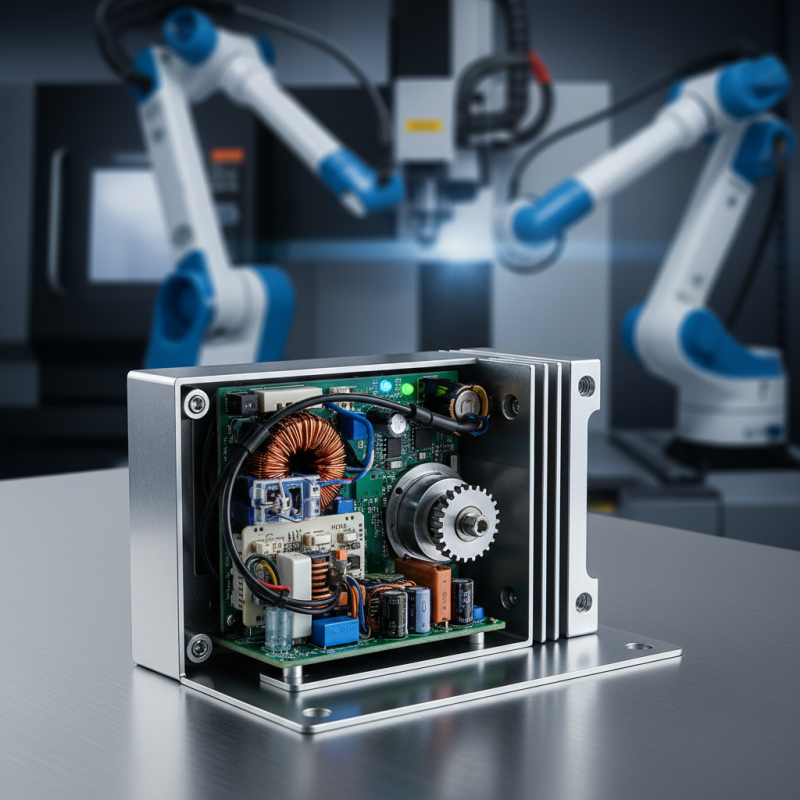
What is a DC Servo Drive?
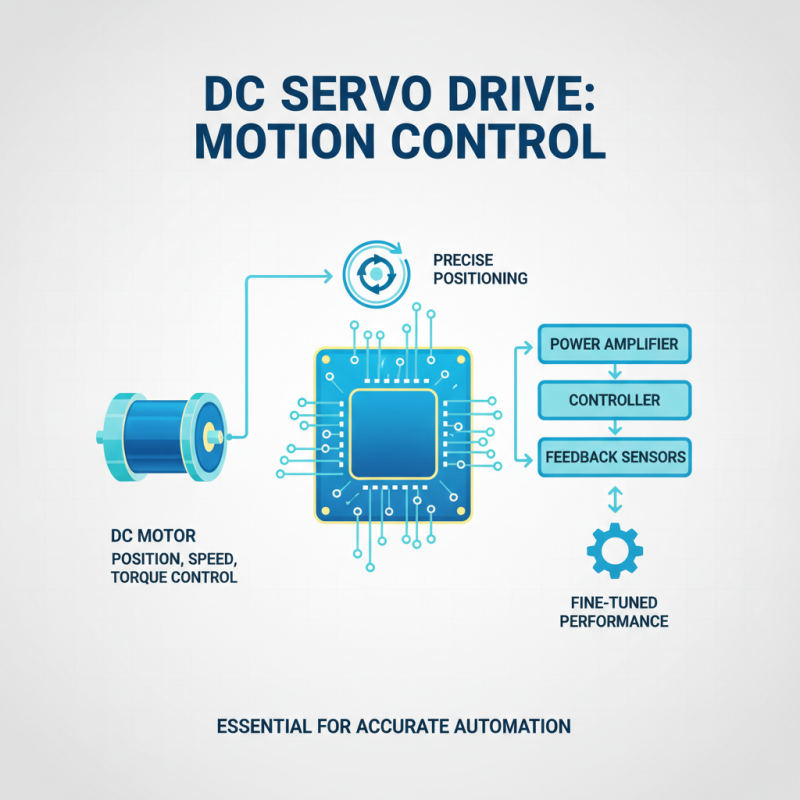
A DC servo drive is an essential component in motion control systems. It precisely controls the position, speed, and torque of a DC motor. This drive provides feedback about the motor’s position, ensuring accurate movement. Generally, it consists of a power amplifier, a controller, and feedback devices. This combination helps achieve fine-tuned performance.
Tips: When selecting a DC servo drive, consider your application’s requirements. Understand the load characteristics and environment. Assess how much control you need. Not all applications require high precision. Sometimes, a simpler solution may suffice.
What sets a DC servo drive apart is its feedback mechanism. This feature allows the system to adjust based on real-time data. The feedback device, often an encoder, measures the motor position. This continuous adjustment enhances performance and accuracy. However, installing a feedback system can be complex. Inaccurate settings can lead to inefficient operation and potential damage.
Tip: Regular maintenance is crucial for longevity. Check wiring and connections periodically. Monitor the performance metrics to catch any deviations early. Ignoring these can lead to bigger problems down the line. A proactive approach saves time and resources.

Key Components of a DC Servo Drive
DC servo drives are essential components in automation and control systems. They transform electrical energy into mechanical movement, providing precision and efficiency in various applications. The effectiveness of a DC servo drive largely depends on its key components.
The main components include the motor, controller, and feedback device. The motor is typically a brushed or brushless DC motor. These motors provide high torque at low speeds, a critical feature in applications requiring precise control. According to a recent industry report, the global DC servo motor market is projected to reach $3.6 billion by 2025, underscoring the importance of these systems.
Controllers interpret signals and adjust the motor's operation accordingly. They ensure that the motor performs as needed, responding to commands with high accuracy. Feedback devices, such as encoders or resolvers, provide vital data about the motor's position and speed. This real-time feedback is crucial for maintaining performance. Without it, the system operates in a less efficient state, highlighting the importance of integrating reliable feedback mechanisms.
What is a DC Servo Drive and How Does it Work? - Key Components of a DC Servo Drive
| Component | Function | Typical Voltage Range | Common Application |
|---|---|---|---|
| DC Motor | Converts electrical energy into mechanical motion. | 24V - 48V | Robotics, conveyors |
| Controller | Receives input signals and regulates motor performance. | 24V - 240V | CNC machines, automation |
| Feedback Device | Provides real-time data on motor position and speed. | N/A | Closed-loop control systems |
| Power Supply | Supplies electrical energy to the system. | 120V - 480V | Industrial machinery |
| Drive Circuit | Converts signals from the controller to drive the motor. | 24V - 150V | Automated systems |
How a DC Servo Drive Operates
A DC servo drive is a critical component in motion control systems. It converts electrical signals into precise mechanical movements. These drives can enhance automation processes in various industries, including manufacturing and robotics. The global servo motor market is projected to grow significantly, reaching over $12 billion by 2025. This growth highlights the increasing reliance on advanced drive technologies.
Operating a DC servo drive involves several vital components. The system consists of a motor, feedback sensor, and controller. The feedback sensor monitors the motor's position or speed. This information is crucial for the controller to adjust the power supplied to the motor accurately. According to industry reports, more than 70% of servo systems rely on accurate feedback for optimal performance. Many systems struggle with noise and interference, affecting their reliability and precision.
The implementation of a DC servo drive can be complex. Fine-tuning the parameters is often required for the desired performance. Often, engineers must iterate through settings to find the optimal configuration. Potential issues also arise from misalignment or insufficient power supply. These challenges can impede system effectiveness and necessitate ongoing adjustments to address them. Overall, careful consideration is required in design and execution to achieve ideal outcomes in motion control applications.
Applications of DC Servo Drives in Industry
DC servo drives play a vital role in various industrial applications. They are utilized in robotics, CNC machines, and conveyor systems. These drives control the speed and position of motors with precision. In robotics, for instance, they enable smooth movements for manipulation tasks. This enhances efficiency in production lines.
In CNC machines, DC servo drives ensure accurate cutting and shaping of materials. They facilitate rapid adjustment of operations, which is crucial for high-quality outputs. Additionally, conveyor systems rely on these drives to maintain consistent speeds. This helps in synchronizing the movement of products along production lines.
Tips for optimizing DC servo drive performance include regular maintenance and calibration. Ensuring proper alignment can prevent wear and prolong equipment life. Monitoring temperature and performance metrics also aids in early detection of issues. When selecting a DC servo drive, consider the specific requirements of the application. Not all drives are suitable for every task, so understanding these nuances is essential for optimal performance.
Advantages and Limitations of DC Servo Drives
DC servo drives are essential for precise motion control in various applications. They offer several advantages that make them favorable in a range of industries. One key benefit is their ability to provide high torque at low speeds. This feature is crucial for tasks requiring careful positioning, such as robotics and CNC machinery. Moreover, DC servo drives are known for their quick response times and reliability in maintaining desired speeds.
However, DC servo drives also come with limitations. They require regular maintenance due to the wear of brushes, which can diminish performance over time. Additionally, their efficiency can drop at higher speeds, reducing overall system effectiveness. This aspect can lead to higher operational costs in some scenarios.
Tips: When choosing a DC servo drive, consider the application requirements. Assess both motor torque and speed to determine the best fit. Regularly inspect and maintain components to extend the lifespan of the system. Reflect on both advantages and disadvantages before finalizing your decision. Balancing performance and costs is vital.
Related Posts
-
Advanced Solutions for Enhancing Efficiency with Hollow Shaft Servo Motors
-

How to Choose the Right Electric Servo Motor for Your Project?
-
7 Reasons Why Your Factory Needs an AC Servo Motor Today
-
Overcoming Common Challenges with Servo Motors: A Deep Dive into Performance and Reliability Issues
-
Electric Servo Motor Showdown: Which Type Reigns Supreme in Performance and Efficiency?
-

Understanding the Benefits of AC Servo Drives in Modern Automation Systems
