What is a Construction Piling Machine and How Does It Work?
A Construction piling machine is an essential piece of equipment in modern engineering. It plays a critical role in foundation work for buildings, bridges, and other structures. This machine drives large piles into the ground, providing stability and support. It ensures that structures can withstand various forces, such as wind and seismic activity.
The operation of a construction piling machine involves a complex process. It utilizes heavy machinery and specialized techniques to drive piles deep into the soil. Factors like soil type and load requirements determine how the machine is used. This complexity adds layers to the work but is vital for long-lasting infrastructure.
Despite its significance, challenges remain. The accuracy of pile placement is crucial. Misalignment can lead to structural problems later. Additionally, working with construction piling machines requires skill and experience. Each project often reveals unique issues that professionals must adapt to. Balancing technical precision with practical construction needs is essential for successful outcomes.
What is a Construction Piling Machine? An Overview of Its Purpose
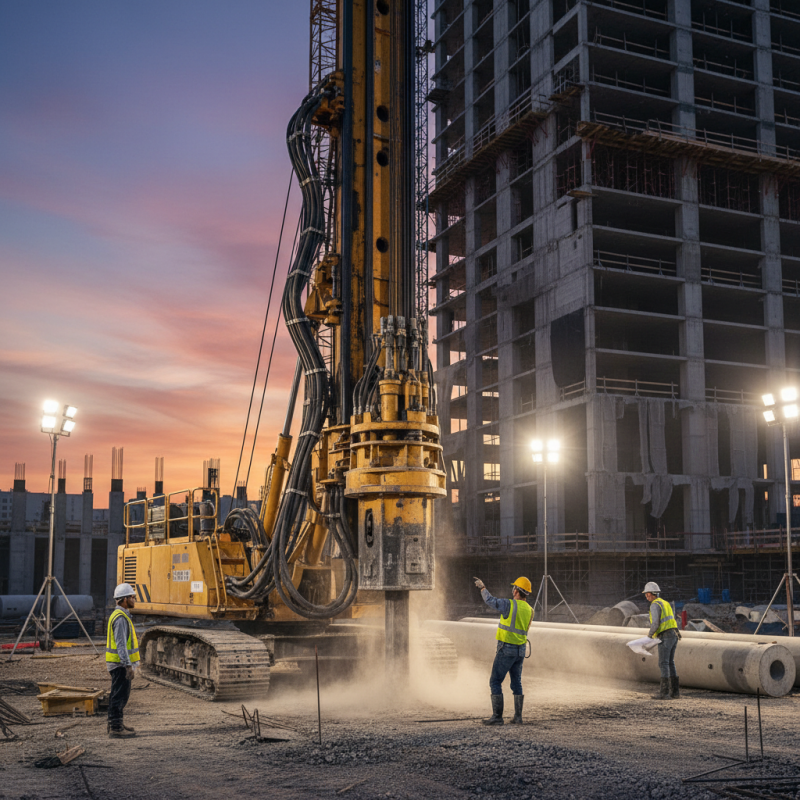
A construction piling machine is an essential piece of heavy equipment. It is designed to drive piles into the ground. These piles act as deep foundations for buildings, bridges, and other structures. The machine can handle various pile types, such as concrete, steel, or timber. According to industry reports, the global piling machine market is projected to grow by 5.8% annually through 2026, underscoring its significance in construction.
The primary purpose of a piling machine is to transfer loads from structures to deeper, more stable soil layers. This is crucial in areas with weak soil. Engineers must assess soil conditions before construction begins. The machine's operation involves vertical or inclined driving methods, depending on the project requirements. These methods can vary in efficiency. Some projects struggle with equipment limitations and soil variability.
Challenges also arise from installation techniques. Some techniques can lead to noise pollution and vibration. The effectiveness of the machine relies on site conditions and operator skills. A skilled operator is necessary for optimal performance. Unfortunately, not all machinery is maintained to the highest standards, leading to potential project delays. Proper training and maintenance are vital for achieving the desired results. Overall, while piling machines are critical, their use must be balanced with environmental considerations and operational efficiency.
Types of Piling Machines: Exploring Different Categories and Applications
Piling machines are essential in construction. They create deep foundations by driving piles into the ground. There are several types of piling machines, each designed for specific tasks and soil conditions. These include rotary piling rigs, hammer piling machines, and drill rigs.
Rotary piling rigs are often used in urban projects. They are highly efficient and can create vertical or angled piles. Hammer piling machines, on the other hand, work by dropping a heavy weight onto the pile. This method is effective in compacting soil quickly. Drill rigs are ideal for softer soils. They remove soil while installing the piles, which allows for greater precision.
Choosing the right type of piling machine is critical. The soil's characteristics heavily influence the decision. It can be a challenge to assess these conditions accurately. Errors in this stage can lead to significant project delays. Each machine has its advantages and limitations. Understanding these nuances is essential for successful construction.
What is a Construction Piling Machine and How Does It Work? - Types of Piling Machines: Exploring Different Categories and Applications
| Type of Piling Machine | Description | Applications | Advantages |
| Impact Pile Driver | Uses a heavy weight to strike the pile and drive it into the ground. | High-rise buildings, bridges, and deep foundations. | Efficient for deep penetration in tough soil. |
| Vibratory Pile Driver | Uses vibrating forces to reduce friction between the pile and the soils. | Dock facilities, residential buildings, and infrastructure projects. | Minimizes noise and ground vibrations during operation. |
| Drilled Shaft Rig | Drills deep holes into the ground where concrete is poured to form piles. | Heavy structures, bridges, and tower foundations. | Ideal for large loads and deep foundations. |
| Continuous Flight Auger (CFA) | Uses an auger to drill into the ground continuously and displace the soil. | Urban construction sites and areas with limited access. | Quick and efficient installation with minimal site disturbance. |
| Plug and Abandon (P&A) Rig | Used for drilling through existing wells to plug them safely. | Decommissioning oil and gas wells. | Ensures environmental safety during well closure. |
Mechanism of Action: How Piling Machines Drive Piles into the Ground
A construction piling machine is essential for driving piles into the ground. It operates by using hydraulic force or vibration, ensuring that the piles penetrate deep into the soil. This method provides stability for structures, especially in challenging terrains. Workers typically attach the pile to the machine, which applies controlled pressure. The weight of the machine aids in the penetration process, enhancing efficiency.
Understanding the mechanism of action is crucial for effective pile installation. Each machine has unique capabilities based on its design. Some machines use oscillation to generate vibrations while others employ a static force. The method chosen often depends on soil conditions. For dense materials, heavy-duty machines can ensure proper pile depth.
Tips: Always assess the soil type before beginning a piling operation. This helps in selecting the right machine and technique. Regular maintenance of the piling equipment ensures reliability and reduces the risk of failures. Equipment operators should be trained properly, as their expertise significantly impacts the project outcome.
Key Specifications: Understanding Load Capacity and Depth Limitations
When it comes to construction piling machines, load capacity and depth limitations are crucial specifications. Load capacity refers to the maximum weight the machine can support. This varies widely among different models. Some machines handle light loads, while others are built for heavy-duty construction. Understanding these factors helps ensure that projects remain safe and efficient.
Depth limitations are also critical. A piling machine's design dictates how deep it can drive piles into the ground. Depth varies based on soil conditions and project requirements. For example, rocky soil may require different techniques compared to sandy soil. Operators must assess the geological features before beginning. Knowing the depth limits prevents costly mistakes and ensures structural integrity.
Despite the clear specifications, challenges arise during operation. For instance, unexpected soil conditions may exceed the machine's capabilities. Operators should be trained to adapt quickly. This experience fosters a safer working environment. Ultimately, understanding load capacity and depth limitations proves essential for successful construction projects. The balance between specifications and real-world applications is key to achieving effective results in the field.
Load Capacity and Depth Limitations of Construction Piling Machines
Industry Trends: Innovations in Piling Technology and Their Impact
The construction industry is evolving rapidly. Innovations in piling technology are reshaping how projects are conducted. New methods focus on efficiency and sustainability. Recently, the introduction of robotic pile driving systems showed promise. These machines expedite the installation process with precision. They often reduce human error and site accidents.
Another trend is the use of eco-friendly materials in piling. Many construction firms are rethinking their approaches. This includes exploring alternatives that minimize environmental impact. Some companies are experimenting with recycled materials. While these advancements are exciting, challenges persist. Integrating new technology into traditional practices can be daunting. Workers need training to adapt to these changes. Balancing innovation with established methods is vital for success.
Moreover, there is a push for smarter machinery. Automated features help monitor soil conditions and load responses. Utilizing data analytics enhances decision-making on construction sites. Yet, reliance on technology can foster overconfidence. It's crucial to maintain a hands-on approach, ensuring human judgment remains integral. As the industry adapts, reflecting on these innovations’ real-world implications will help shape its future.
