How to Choose the Best Home EV Charger for Your Needs?
Choosing the right Home Ev Charger can be daunting. With so many options available, it's essential to weigh your specific needs carefully. David Anderson, an industry expert and founder of SmartCharge Solutions, points out, “Not all chargers fit every home, so understanding your requirements is key.”
Each household has unique power needs. Factors like vehicle type, daily usage, and installation capacity matter greatly. A well-chosen Home EV Charger enhances convenience and efficiency. For example, some chargers offer faster charging times, which suit busy families. Others may prioritize energy efficiency, appealing to eco-conscious homeowners.
While many options exist, it’s easy to overlook details. Selecting a charger that suits your electrical system and space is crucial. You might find cheaper models at first glance. However, they may lack durability or adequate features. Reflecting on these aspects can lead to a more satisfying choice in the long run. Make sure to explore various features and consult with professionals when in doubt.
Understanding Your Electric Vehicle Charging Needs
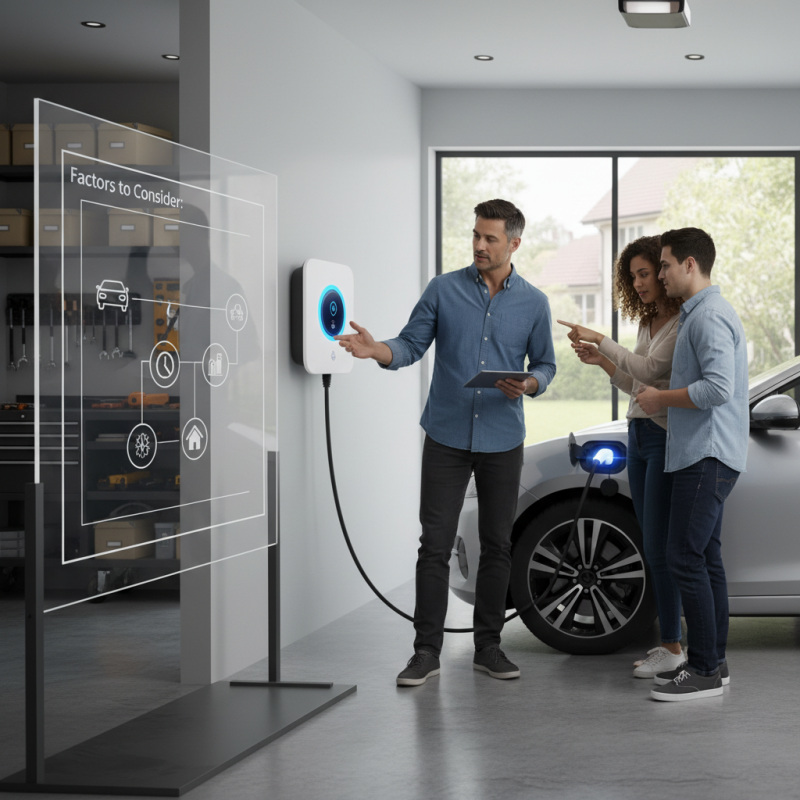
Understanding your electric vehicle charging needs is crucial in selecting the right home EV charger. The primary consideration is the charging speed. Different chargers offer varied power output. Home chargers typically range from Level 1 to Level 2. Level 1 chargers provide slower charging, suitable for overnight use. Level 2 chargers are faster and more efficient, ideal for daily needs. Before making a decision, assess your daily driving habits. Think about how much you drive and when you usually charge your vehicle.
Another factor is the installation location. Consider the distance from your electrical panel to your parking space. This distance will impact installation costs. Some homes might need electrical upgrades for a Level 2 charger. It’s wise to consult a professional in such cases.
Energy source availability also matters. Check local utility rates for charging at different times. This helps reduce costs and optimize energy use. Reflect on these elements carefully, as they play a significant role in your overall EV experience.
Types of Home EV Chargers: Level 1 vs. Level 2
When considering a home EV charger, the two main types to choose from are Level 1 and Level 2 chargers. Level 1 chargers use a standard 120-volt outlet, making them easy to install. They typically deliver around 2 to 5 miles of range per hour. This option is great for those with limited driving needs and overnight charging capability.
On the other hand, Level 2 chargers operate at 240 volts and provide a faster charging experience. They can add 10 to 60 miles of range in just one hour. This faster rate suits drivers who rely on their electric vehicles for daily commutes or long trips. Installation may require a professional electrician, which adds to the cost but can be worth it for the convenience.
Understanding your driving habits is essential. If you have multiple vehicles or frequently travel long distances, a Level 2 charger might be more suitable. However, if you rarely drive far, a Level 1 charger may suffice. Weigh these options carefully. The right choice depends on your lifestyle, budget, and available space for installation.
Home EV Charger Comparison: Level 1 vs Level 2
Factors to Consider: Power Output and Charging Speed
When choosing a home EV charger, power output and charging speed are crucial factors. Understanding these can simplify your decision. Power output is typically measured in kilowatts (kW). Higher kW ratings mean faster charging. A 7.2 kW charger, for example, can fully charge many EVs overnight. Conversely, a lower output charger may require longer charging times, which could be inconvenient.
Charging speed is equally important. Level 1 chargers are standard household outlets. They provide slower charging rates and can take hours to fully charge your vehicle. On the other hand, Level 2 chargers offer faster options. They can charge your car in a matter of hours instead of overnight. Assess your driving habits and daily mileage to select the best charging speed that fits your lifestyle.
It's essential to consider the compatibility of your charger with your vehicle model. Not all EVs accept the same charging speeds. Some may be limited in how quickly they can charge, regardless of the charger’s capability. This is a common oversight and can lead to frustration. Always research and match the charger specifications with your specific needs to avoid unexpected delays in charging your vehicle.
Installation Requirements and Costs for Home Chargers
When considering a home EV charger, installation requirements are crucial. Every home is different. Some homes need electrical upgrades before a charger is installed. Check your electrical panel's capacity first. A standard charger typically requires a dedicated circuit. If your panel is outdated or overloaded, it might need a replacement. Consulting a qualified electrician is essential for safety and compliance.
Costs can vary significantly based on installation complexity. Basic installations might range from $500 to $1,500. More extensive electrical work can increase this cost. Some homeowners may also need to trench for wiring, adding to the expense. It’s important to get multiple quotes. Pay attention to hidden fees. Discuss permits and inspections with your electrician. These can add time and cost.
Choosing the right location for your charger is also key. Ensure it’s accessible and safe from weather elements. Some users might overlook local regulations. These can affect installation options and legality. There's a lot to think about. Take your time and weigh your options. This investment impacts your long-term savings and convenience. Be sure to reflect on your specific needs before making a decision.
How to Choose the Best Home EV Charger for Your Needs? - Installation Requirements and Costs for Home Chargers
| Charger Type | Charging Speed (Miles per Hour) | Installation Difficulty | Average Cost ($) | Power Requirement (kW) | Best For |
| Level 1 Charger | 2-5 | Easy | 300-600 | 1.4-2.3 | Occasional users |
| Level 2 Charger | 10-60 | Moderate | 500-1,200 | 3.3-19.2 | Frequent users |
| DC Fast Charger | 60-250 | Complex | 10,000+ | 50-350 | Commercial use |
| Solar Charger | Varies | Moderate | 1,000-3,000 | 3-6 | Eco-conscious users |
Additional Features to Look for in EV Chargers
When selecting a home EV charger, consider additional features that enhance convenience and safety. Features like smart charging capabilities can optimize charging time and reduce costs. Look for chargers that offer Wi-Fi connectivity. This allows you to control and monitor charging through a smartphone app. Such an app can provide real-time updates and usage statistics.
Safety is paramount when dealing with electrical devices. Choose chargers with built-in safety features like over-current protection and surge protection. A model that is weatherproof can also ensure durability in varied conditions. Some chargers include adjustable charging power levels, which can be beneficial for different vehicle requirements.
You might come across options with integration into solar power systems. This can be a significant advantage for eco-conscious users. However, be cautious. Not all systems are compatible, and sometimes integration may pose challenges. Keep in mind the importance of warranty and customer support. Researching user reviews can also help identify potential long-term issues with a charger. Reflect on your current and future needs. A charger should not only meet today’s demands but also adapt to future vehicle advancements.
