China Best Horizontal Shaft Concrete Mixer Manufacturer?
Choosing the best China manufacturer requires more than comparing prices, motor power, or catalogue photographs. A reliable Horizontal Shaft Concrete Mixer should produce a consistent blend, tolerate demanding aggregates, and remain serviceable after thousands of batches. In real projects, technicians notice the details first: evenly coated paddles, clean discharge gates, firm shaft seals, and bearings protected from cement dust.
Concrete technology pioneer Duff A. Abrams stated, “The strength of concrete depends primarily upon its water-cement ratio.” His principle still matters when evaluating a mixer. Poor mixing can create dry pockets, uneven moisture, and unstable workability, even when the recipe appears correct. A strong Horizontal Shaft Concrete Mixer helps operators achieve repeatable results, but it cannot repair poor material measurement or careless maintenance.
This guide examines how to identify a dependable Chinese supplier through manufacturing experience, engineering capability, and after-sales support. It considers shaft design, mixing arms, liner materials, gearbox performance, safety controls, spare-part availability, and factory testing. A serious manufacturer should explain its design choices clearly. Ask for batch-test records.
Look beyond polished brochures.
Site visits, video inspections, and customer references can reveal more than marketing claims. Still, no supplier is perfect. A cheaper machine may perform well in moderate conditions, while a premium model may disappoint without proper installation. That is the part buyers should question. The best choice depends on concrete type, batch size, aggregate shape, operating climate, and service expectations. This comparison aims to make that decision practical, evidence-based, and easier to verify.
China Horizontal-Shaft Mixer Types: 0.5–4 m³ Batches, 15–120 m³/h Output
China Best Horizontal Shaft Concrete Mixer Manufacturer?
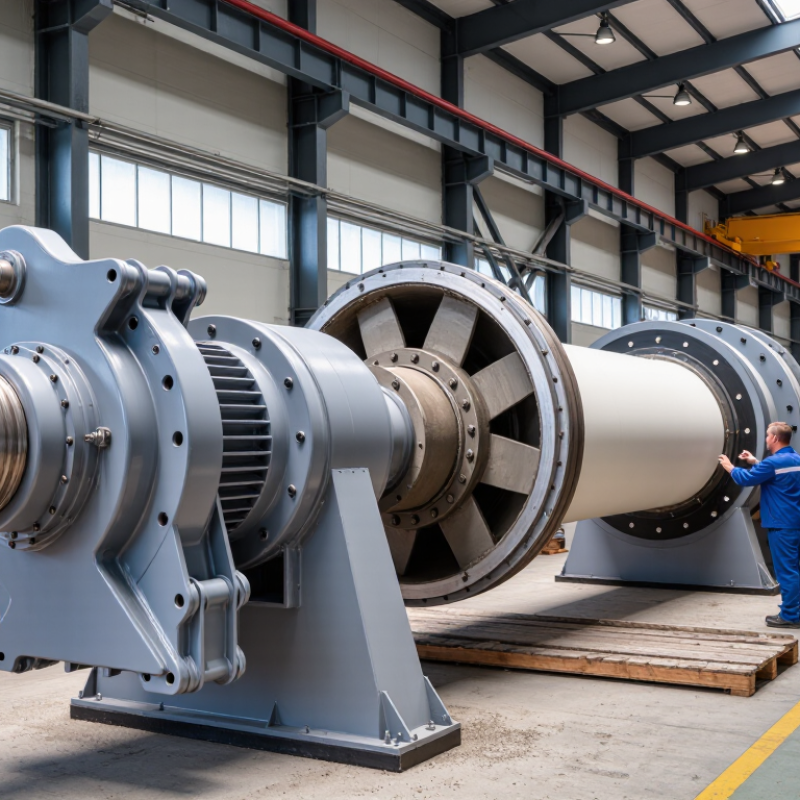
China’s horizontal-shaft mixer market covers compact 0.5 m³ units and heavy 4 m³ batch machines. These sizes serve precast yards, jobsite plants, and ready-mix facilities. Twin-shaft mixers use overlapping paddles for rapid, forceful blending. Single-shaft models can offer simpler inspection and maintenance. The correct choice depends on aggregate size, slump, recipe, and cleaning access.
Rated output ranges from 15 to 120 m³/h. A 0.5 m³ mixer producing 15 m³/h completes about 30 theoretical batches hourly. A 4 m³ unit reaching 120 m³/h follows the same arithmetic. Real production is lower. Loading delays, moisture correction, discharge time, and washout change the result. Nominal output can mislead. It often does.
The Global Cement and Concrete Association reports roughly 14 billion m³ of concrete produced worldwide each year. The International Energy Agency identifies cement production as responsible for about 7% of global carbon dioxide emissions. Efficient mixing therefore matters beyond speed. Buyers should request measured test results using their own sand, aggregate, and target slump. Check shaft torque, liner wear, seal protection, emergency access, and batch consistency. I would also inspect the discharge door closely. A small residue pocket can disturb the next recipe. Sales sheets rarely show that problem.
Batching Accuracy: ASTM C94 Allows Water ±1% and Aggregate ±2%
China Best Horizontal Shaft Concrete Mixer Manufacturer?
Batching accuracy often matters more than mixer appearance. ASTM C94/C94M allows water variation of ±1% and aggregate variation of ±2% from the required batch quantity. These limits are practical targets for production control, not decorative numbers on a brochure.
A reliable horizontal shaft mixer system should support stable weighing, controlled gates, and clear calibration access. For example, a 1,000-kilogram aggregate batch permits only a 20-kilogram variation under the ±2% limit. Water has less room for error. A 300-kilogram water batch allows approximately 3 kilograms of variation. Small errors can change slump, strength, and finishing behavior.
±2%
Aggregate variation from the required batch quantity.
±1%
Water variation from the required batch quantity.
Check the load cells.
Dust, moisture, and buildup can distort readings. Wet sand may also carry hidden water into the mixer, even when the water scale appears accurate. Operators should record moisture tests, scale checks, and actual batch weights. The selected manufacturer should provide practical calibration procedures and accessible maintenance points. Ask for test records, not only claimed capacity. ASTM requirements can vary by adopted edition, contract, or local specification, so the project engineer should confirm the governing details. A perfect tolerance on paper can still fail during a rushed shift. That is where equipment design meets real workmanship.
Manufacturer Scorecard: Capacity, Warranty, Certifications, and Total Cost
China Best Horizontal Shaft Concrete Mixer Manufacturer?
Manufacturer Scorecard: Capacity, Warranty, Certifications, and Total Cost
Choosing a horizontal shaft concrete mixer requires more than comparing the listed output. A reliable scorecard starts with usable capacity, mixing speed, and discharge time. Ask for test data using your actual aggregate size and moisture level. A machine rated at 1,000 liters may deliver less under demanding conditions. That difference affects every truck waiting beside the mixer.
Warranty terms deserve careful reading. Check coverage for the gearbox, shaft seals, liners, and electrical controls separately. Confirm response times, spare-part availability, and who pays for shipping. A two-year warranty sounds strong, but exclusions can weaken it. Request a written repair procedure. Keep it practical.
Certifications should be verifiable, not decorative documents. Review factory quality systems, electrical safety records, welding procedures, and material certificates. Independent inspection before shipment can reveal poor alignment or uneven welds. It costs extra, sometimes annoyingly so. Yet one misaligned shaft can create vibration, downtime, and premature bearing failure.
Total cost includes installation, power use, wear parts, training, freight, and local service. Compare expected liner life, not only purchase prices. Ask for a five-year operating estimate with realistic production hours. I have seen low-cost equipment become expensive after repeated seal replacements. Still, estimates can mislead when site conditions change. Leave room for dust, weather, operator skill, and delayed parts. A clear scorecard makes those risks visible.
China Best Horizontal Shaft Concrete Mixer Manufacturer? — Manufacturer Scorecard
Anonymous market benchmarks comparing common horizontal shaft mixer classes by rated batch capacity, standard warranty coverage, certification count, and normalized five-year total cost of ownership.
The capacity figures represent typical rated batch sizes. Warranty coverage is commonly stated in months, while certification count refers to commonly requested quality and product-compliance documentation. The five-year total-cost index is normalized to 100 for the smallest equipment class and should be used for procurement comparison rather than as a quoted price.
