2026 Best Big Screen TV for Global Buyers?
Choosing the 2026 best Big Screen Tv is not simply a contest between the largest panels. Global buyers face different rooms, broadcasts, power standards, prices, and warranty conditions. A 98-inch screen may look impressive in a bright showroom, yet feel overwhelming in a small apartment.
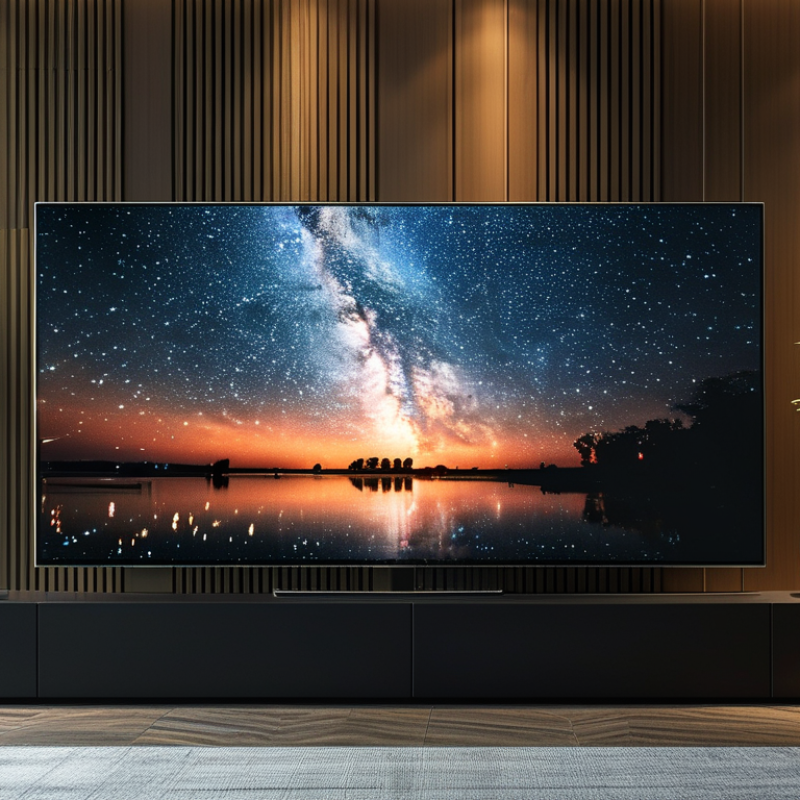
Vincent Teoh, founder of HDTVTest and a respected display expert, says, “OLED TVs can deliver perfect blacks and pixel-level dimming.” That advantage matters during dark films, where stars remain sharp against a deep black sky. However, OLED is not automatically ideal for every household. Bright living rooms, long news sessions, and aggressive regional pricing can make a high-quality Mini-LED model more practical.
Room size matters.
This guide compares flagship and value-focused Big Screen Tv models using measurable criteria. We consider peak brightness, local dimming, motion handling, HDR accuracy, gaming latency, viewing angles, operating systems, and HDMI 2.1 support. We also examine practical details, including stand width, wall-mount compatibility, energy use, and regional software restrictions.
A global recommendation must remain cautious. Tuners, streaming apps, voice features, and warranty coverage can change by country. Importing a television may also create repair problems later. Those details are easy to overlook.
Our testing perspective is not perfect. Screen samples vary, firmware changes, and personal preferences remain important. A cinema enthusiast may prefer OLED contrast, while a sports fan may value brighter motion and stronger reflection control. The best choice depends on how, where, and how often you watch.
What Defines a Big-Screen TV in 2026
What Defines a Big-Screen TV in 2026
A big-screen TV is no longer defined by size alone. For many homes, 75 inches now feels like the practical starting point. Larger 85-inch and 98-inch screens suit wider rooms and deeper seating. Size is relative. Measure the wall first.
A useful rule is simple: place the main seat about 1.2 to 1.6 times the screen’s diagonal size away. A 75-inch display may feel comfortable from roughly 2.3 to 3 meters. Sitting too close can expose motion flaws and compression noise. Sitting too far wastes detail. Room lighting matters, too. Strong daylight needs high brightness and effective reflection control, while a darker room benefits from accurate shadow detail.
In 2026, a genuinely large-screen TV should combine sharp 4K resolution, smooth motion, strong contrast, and wide viewing angles. A 120Hz refresh rate can make sports and games appear cleaner, but only when the source supports it. Built-in sound remains a weakness on very thin sets. A separate audio system may improve dialogue, especially in open-plan rooms. Check local broadcast standards, streaming compatibility, energy labels, and electrical requirements before buying across borders. These details are easy to overlook.
Bigger is not always better. A massive screen can dominate a small room and cause viewing fatigue. Even professional testing has limits because personal eyesight, content quality, and lighting vary. That uncertainty deserves attention.
Key Display Technologies and Picture Quality Factors
2026 Best Big Screen TV for Global Buyers?
Key Display Technologies and Picture Quality Factors
A large-screen television should match your room, not just your wish list. OLED panels can produce nearly perfect blacks because each pixel controls its own light. This creates strong contrast in a dark movie scene. Mini LED displays use thousands of smaller backlight zones. They can become extremely bright, which helps in sunny rooms and with high dynamic range content. However, bright subtitles may create a faint halo around dark objects. No panel is perfect.
Quantum-dot layers can improve color volume, especially in bright red, green, and blue scenes. Still, impressive color is not the same as accurate color. Look for natural skin tones, controlled highlights, and a useful filmmaker or cinema mode. A wide color range matters less when the television exaggerates every sunset. It can look beautiful. It can also look false.
Motion processing deserves careful attention. A fast refresh rate helps sports and games, while poor processing can make films look unnaturally smooth. Test a slow camera pan if possible. Observe a football crossing the screen. Does the grass stay clear, or does it smear? Viewing angle also matters for wide seating areas. Contrast may fall when you move sideways. I would not trust showroom brightness alone, because retail settings often hide everyday flaws. Measure viewing distance, check local broadcast standards, and compare dark-room and daylight performance before choosing.
Full-screen HDR brightness is one of the most important picture-quality factors for large-screen TVs. Mini-LED LCD displays generally deliver higher sustained brightness, while OLED technologies provide pixel-level light control and near-infinite black levels. Actual performance varies by panel generation, screen size, picture mode, and test method.
How to Compare Screen Sizes, Resolutions, and Viewing Distance
2026 Best Big Screen TV for Global Buyers?
How to Compare Screen Sizes, Resolutions, and Viewing Distance
Choosing a large-screen television starts with your room, not the biggest number on a product page. Measure the distance from your eyes to the screen. For many living rooms, a 55-inch screen suits about 2.1 to 2.7 metres. A 65-inch model often works around 2.4 to 3.2 metres. These ranges are practical guides, not strict laws. I have found that personal comfort matters as much as calculation. Some viewers enjoy a cinema-like image. Others find it tiring.
Resolution becomes more important as the screen grows or the sofa moves closer. Full HD can look acceptable on smaller screens, but 4K usually provides sharper text, faces, and sports details. A very large 8K screen may show extra clarity at close range, yet the benefit depends on content quality and viewing distance. Broadcast signals, streaming compression, and room lighting can reduce the difference. Bigger is not always better.
Tips: Sit at your usual position before buying. Mark the screen width on a wall with removable tape. Check subtitles from that distance. They should look clear without forcing your eyes. Compare daylight glare and evening reflections, too. My own mistake was measuring only the sofa distance; the screen stand added several centimetres and changed the viewing angle. A wall may also need stronger support than expected.
Smart Features, Connectivity, and Global Compatibility
Choosing the 2026 best big-screen TV for global buyers means checking compatibility, not only picture size. Omdia’s Global TV Display & OEM Intelligence Service reported approximately 208.5 million TV shipments worldwide in 2024. That scale reflects diverse homes, networks, and viewing habits. A strong model should support current Wi-Fi standards, Ethernet, Bluetooth, and multiple HDMI inputs. Bandwidth matters. Smooth 4K streaming can fail when a television handles crowded wireless networks poorly.
Smart features should include clear menus, regular security updates, voice controls, and access to widely used streaming protocols. The Connectivity Standards Alliance reports that Matter adoption is expanding across connected-home devices, but television support remains uneven by region. Buyers should check whether smart-home control works locally, without forcing cloud-dependent services. The ITU reported 5.5 billion people were online in 2024, yet access quality differs sharply between countries. Global compatibility is therefore more than language selection.
I test menus in several languages and connect the television to both a modern router and an older one. Small details matter, such as subtitle rendering, 50 Hz broadcast support, and voltage range. HDMI features can also vary between ports. No checklist is perfect. I still find regional app restrictions frustrating, even on expensive screens. A practical choice offers dependable fallback options: external streaming devices, optical audio output, and manual picture controls. Check the manufacturer’s regional specifications before purchase, because “smart” does not always mean universally compatible.
Choosing the Best Big-Screen TV for Different Buyer Needs
Choosing the best big-screen TV depends on the room, content, and viewing habits—not only screen size. Omdia’s 2024 TV Display and OEM Intelligence Service estimated global TV shipments at roughly 208 million units in 2023. That scale shows how varied buyer needs have become. A 75-inch screen suits a viewing distance near three meters, while an 85-inch model may feel excessive in a small apartment. Measure first. It sounds obvious, but many buyers skip it.
For film-focused homes, prioritize strong black levels, accurate calibration, and wide viewing angles. OLED technology can deliver excellent contrast, but static logos may create image-retention concerns over long periods. Bright-room buyers need high sustained brightness and effective reflection control. Peak brightness figures can mislead. They are not measured equally across manufacturers. Sports viewers should examine motion handling, while gamers need low input lag, variable refresh support, and sufficient HDMI bandwidth.
Energy use also matters across regions. The International Energy Agency notes that televisions remain a significant household electricity load, especially when large screens operate for many hours. Check the local energy label, voltage compatibility, tuner standard, and warranty coverage before importing. The U.S. Environmental Protection Agency’s ENERGY STAR program also reports that certified televisions generally use less energy than conventional models. Yet efficiency should not be judged alone. A dim display may disappoint in daylight, and an oversized screen can increase power consumption. My practical mistake was trusting specifications before testing glare, subtitles, and dialogue clarity from the sofa.
